Our Story
The story behind the name, the people, and the legacy.

Carl Adamson
I'm Carl, the founder of Debbicot Press and the son of the late playwright, Bridgette C White.
My writing journey started when I was just 2 years old, telling stories about the adventures of my Teddy Bear. At the same time, I was always perplexed when adults would exclaim at my use of BIG words, such as "Psychology", in conversations with them, at such a young age.
Having grown up with my younger sister and with my mother, a relentless playwright, I often felt more like an extra in one of her plays, rather than her son.
Mum's plays were everything. She always told us they were: "Our meal ticket to a better life. A house next door to Cliff Richard. No more money worries."
I know she truly believed this but the odds were against her. Writing is a tough business, even today. But the challenges of being a playwright add an element of unpredictability to the equation of success:
Reliance on other people such as Actors, Producers, Set Designers, Marketers, a whole production team.
The only escape route as a playwright is to be "discovered" by a Producer, Impresario or Angel Investor, who takes on the financial risks, allowing the playwright to focus on the writing.
My mother wasn't fortunate enough to have any of those. It was just her, her two children, her plays and trusty typewriter, to take on the glitzy world of showbiz.
Here, I tell the story of Debbicot, a family legacy of storytelling, that dates back to the 19th Century.

Debbicot
Debbicot (Irish name "Gob an Choite") was a sleepy hamlet back then, nestled on the banks of the River Triogue, on the rural outskirts of the busy market town of Mountmellick, County Laois, Ireland.
In the mid 1800s, Mountmellick was considered "The Manchester of Ireland", with passenger boats, on the Grand Canal, bringing shoppers to snap up bargains from this thriving market town, famous for its lace embroidery and beer. At the same time, the breweries and the mills would export their products all over the world from that same canal.
Debbicot (often spelt "Debicot") was nothing special, just a small group of modest houses, mainly occupied by blue-collar workers, people who had to work hard with their hands in embroidery, the local mills and brewery, farming the land and finding any paid manual labour that would put much-needed food on the table for the large families that lived there. It was a hard life. For many, it was more of an existence, living hand-to-mouth, when those mouths would often go hungry.
But today, Debbicot holds a special place in my heart because that's where my mother's family was born and raised.
My knowledge of Debbicot stems from family stories, told by my grandmother, from the years after the Potato Famine and the oncoming of WW1, in which her brothers were killed in action.
However, it is the romance of Debbicot that will always stay with me. The stories my mother, Bridgette C White, wrote about this magical place. A place that only existed in the mind of a child who became a playwright, and created adventures in a land of leprechauns and four-leaf clover. That is the Debbicot I shall hold dear forever.
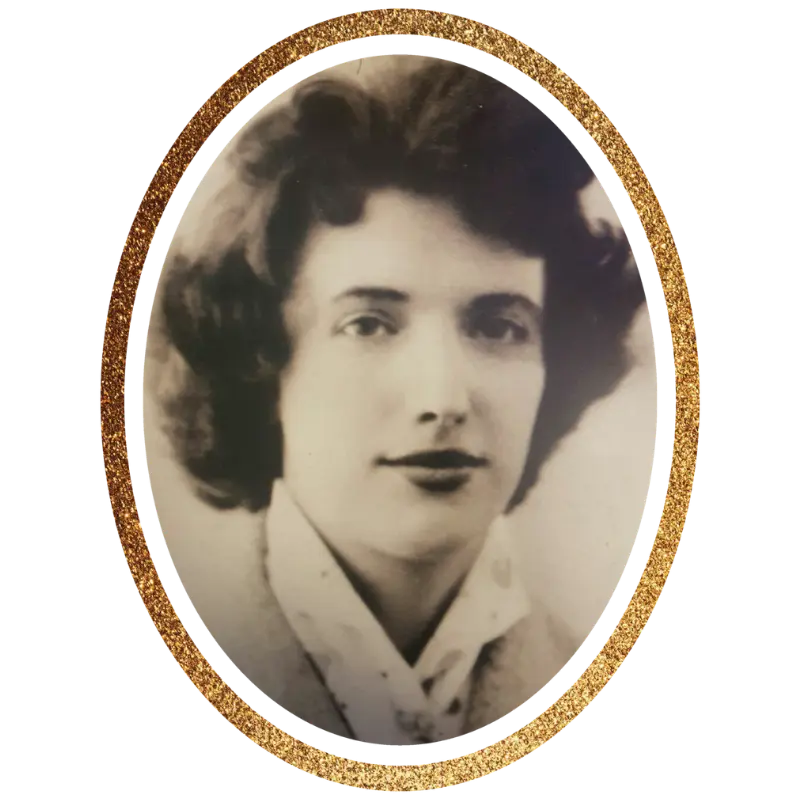
Bridgette C White
My mother, Bridgette C White, was born a writer. From a very early age she would write stories about her imaginary friends and the adventures they got up to. Those stories would take her to faraway places, but never further from the place she dreamed about most, the birthplace of her mother, Debbicot.
Although she never visited Debbicot in her lifetime, she continued to write those stories at school, receiving a commendation for the quality of her writing, at such a young age.
As an adult, Bridgette grew fond of writing plays. As a playwright, she found she could really express herself in ways that she felt limited when writing stories.
Although, it wasn't as easy as that. The downside for her was, unlike books, plays required actors. Actors needed to be paid. Not to mention all of the production costs associated with putting on a play.
Undeterred, she went all in, and became a one-person production company, later known as Debbicot Theatre Productions.
Ultimately, that was her professional downfall as a playwright.
Because unlike the numerous online marketing opportunities available to us today, Bridgette had limited resources to make her productions known, apart from a well-used manual Olivetti typewriter, carbon paper, typewriter correction fluid, and borrowed access to an ancient Gestetner machine for running off copies of scripts and handmade publicity leaflets.
Nevertheless, she threw herself into everything, trying her best to launch every play she wrote.
But getting reliable actors was her greatest problem. She was a good playwright, but had little to no available funds to invest in her plays. She tried everything from offering actors a box office split, to giving them shares in her production company. Alas, without a guaranteed monetary incentive up front, those equally poor actors had no skin in the game and often didn't show up for rehearsals, despite her having paid in advance for the hire of the hall.
From my earliest childhood memories, the constant clacking of that Olivetti typewriter became an annoyance. The noise, sometimes deafening, meant that I would try to be in another room or in the garden, often with my fingers in my ears, hoping for it to end. It rarely did.
Night and day, she would sit on the sofa, surrounded by freshly screwed up paper that she had angrily ripped from the typewriter and tossed aside, whilst muttering words I shall not repeat here.
Her writing was relentless. By the end of her life, she had written dozens of plays and produced only a handful, to be performed in front of a live audience.
At the age of 14, I was press-ganged by my mother into being a leading actor in one of her plays. My reward? My character, Norman, got to eat 6 French Fancy cakes in the Kitchen and Vicar Scene. A part I liked to rehearse often!
Sadly, none of those plays made the breakthrough that she had always longed for. Yet she kept writing until a few days before she died.
My sister and I have very little to show for mother's dedication to her work as a writer. There are only a handful of partial manuscripts left.
As the curtain fell at the end of Act 2 of Bridgette's lifetime career as a playwright, it never rose again for Act 3. Her performance was cancelled, together with the applause.
There was no finale, no encore, just silence as the lights went down!
Despite this, I give thanks for my mother's writing because without it, I would not be here. She met my father when he auditioned as an actor for a part in one of her plays.
I am the living encore of that production!
Bridgette C White
Playwright!
1927 - 2017 RIP 🙏
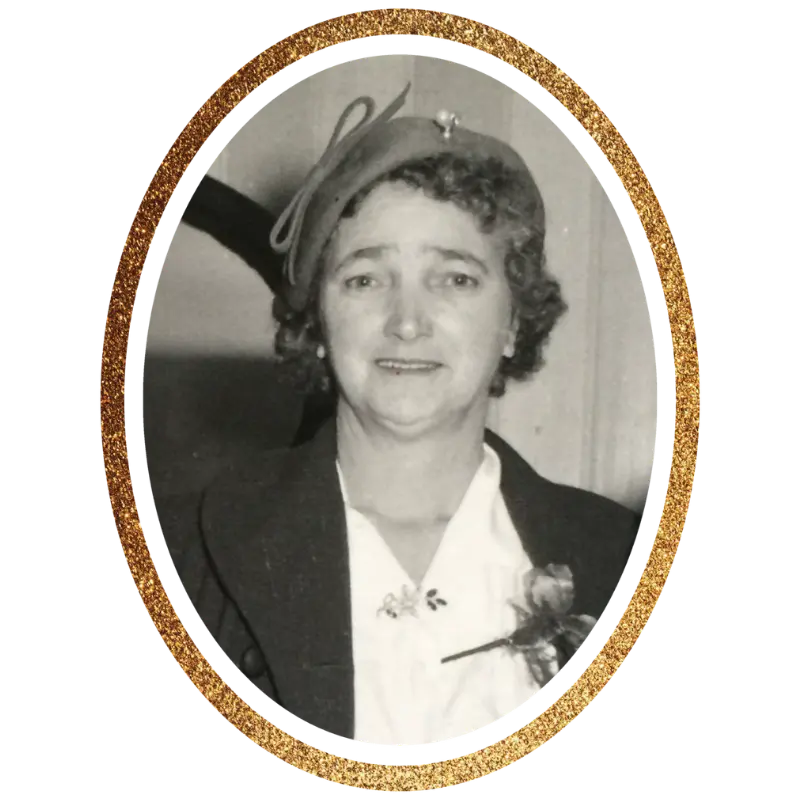
Margaret Dowling
Margaret Dowling was the daughter of Christopher Doolan of Debbicot, mother of Bridgette C White, and to me, she was simply "Nanny".
Like many Doolans of late 19th Century Ireland, Margaret's surname was registered as Dowling, probably due to phonetic spelling variations, illiteracy, and regional accents.
She was the oldest daughter of 15 children. She had a tough childhood. Money was tight. Food was optional, only available when there was money in the tin to buy modest rations for so many hungry mouths.
She travelled to England, as a young teenager, to learn her craft as a professional cook. A skill that I became very grateful for, for the first nine years of my life.
Margaret was a woman of few words. But when she spoke, she made every word count. A woman of tremendous wisdom, who gave no time to frivolous chit chat or idle gossip.
The values she taught me whilst growing up were more than life values. They later became the foundation of my professional coaching and training frameworks. They now underpin how I coach the leaders of global corporations, household names, to empower them and their businesses to deliver on their promises.
I've always known when Nanny's wisdom hit home with business leaders, as I often heard them saying, "Remember what Carl's granny said...," when they were planning their work for the next Sprint. Indeed, it was Nanny's advice, given to me as a child, that decades later, empowered modern businesses to deliver on their promises to customers, sometimes after two years of failing to do so.
If Nanny was able to see this or even read this now, I know exactly what she would say:
"Don't be so daft!"
She never took praise well. She always dismissed it. She would shy away from being in the limelight at all costs.
She also hid from the world her biggest secret: a big heart, overflowing with kindness!
A heart that eventually failed her at the young age of 73.
A heart that now beats stronger and louder than ever, in those senior business leaders who I have trained and coached over the years, as they act on her undying wisdom.
Nanny, this website was relaunched on the 53rd anniversary of your passing. I still miss you and Grandpop. I always will.
Thank you for everything.
Margaret Dowling of Debbicot
Mother of Bridgette C White, Soul Mate of Grandpop, "Nanny"
1899 - 1973 RIP 🙏
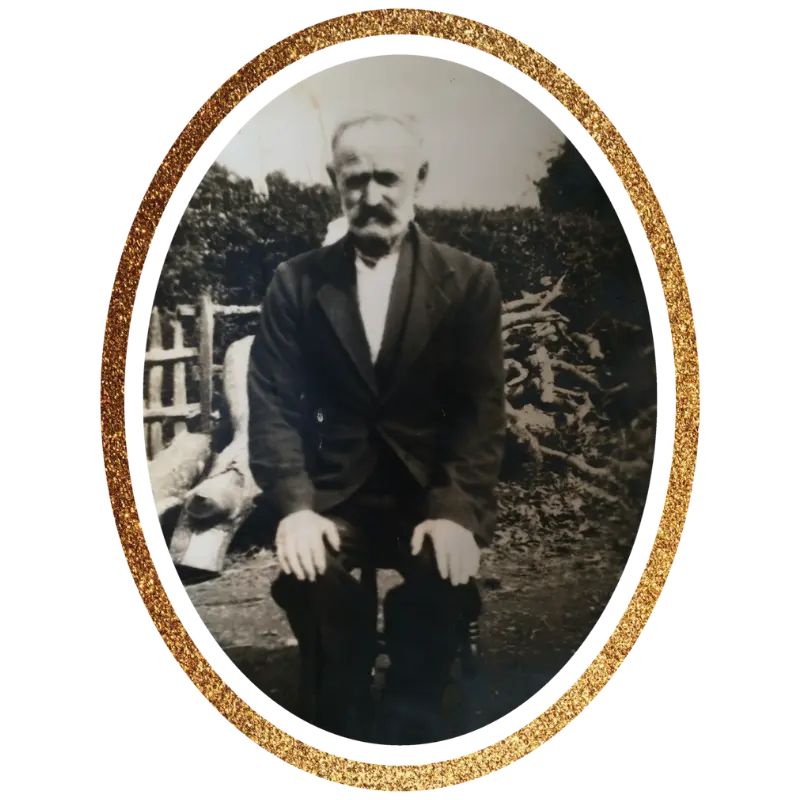
Christopher Doolan
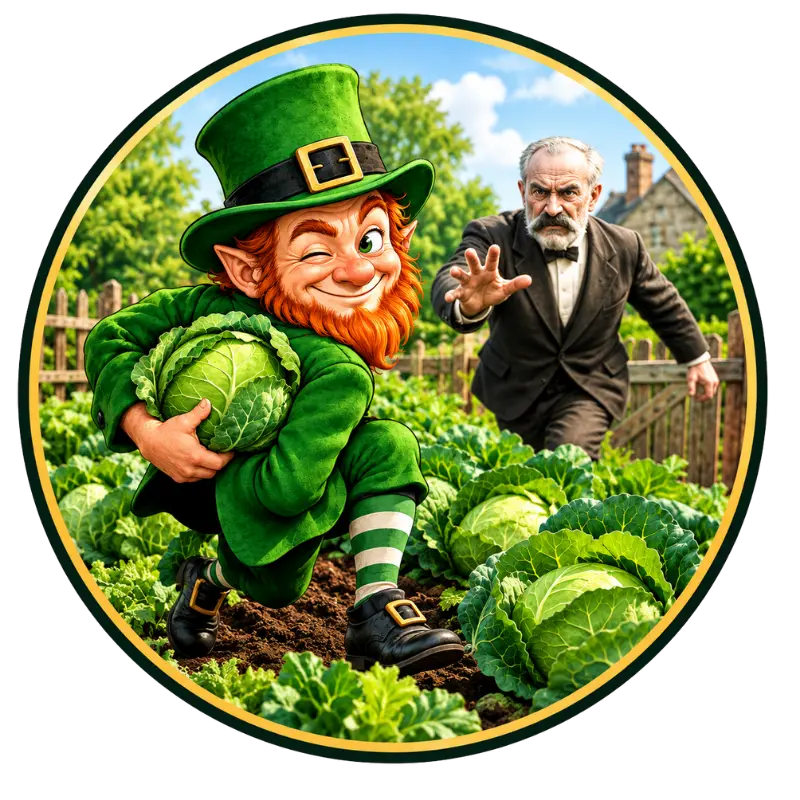
The father of a family of 15 children, including Margaret Doolan (Dowling), Christopher Doolan lived at Debbicot. He was a proud man, a manual labourer. His claim to fame was his story: "The Leprechaun and The Cabbage".
Whilst walking home one night from the local pub, Christopher noticed something strange happening on his prized vegetable plot. As he got closer, he squinted his eyes for them to adjust to the darkness, and there it was in plain sight. Sure enough, a poacher was doing his dirty deed. But this was no normal poacher. It was a leprechaun. More importantly, it was stealing one of Christopher's prized cabbages.
Times were hard. Food was scarce. Christopher was outraged. As he began to run towards the said cabbage, red mist ensued and Christopher shouted, "Put that down, you bugger!"
In that moment, the leprechaun looked over his shoulder, made eye contact with Christopher, and cheekily winked at him. Of course, this enraged Christopher all the more, as he charged at the leprechaun, shaking his fist and waving his shillelagh.
Unsurprisingly, the leprechaun ran off at speed, but not without taking Christopher's prized cabbage with him.
When Christopher arrived home at Debbicot, he told his family what had happened. Naturally, they didn't believe him, they knew he had been drinking.
But Christopher angrily defended that story for years. The irony is, he remained angry that his prize cabbage had been stolen. Not that it had been stolen by a leprechaun!
Christopher Doolan of Debbicot
Father of Margaret Dowling, Husband, Leprechaun Chaser
1855 - 1932 RIP 🙏